
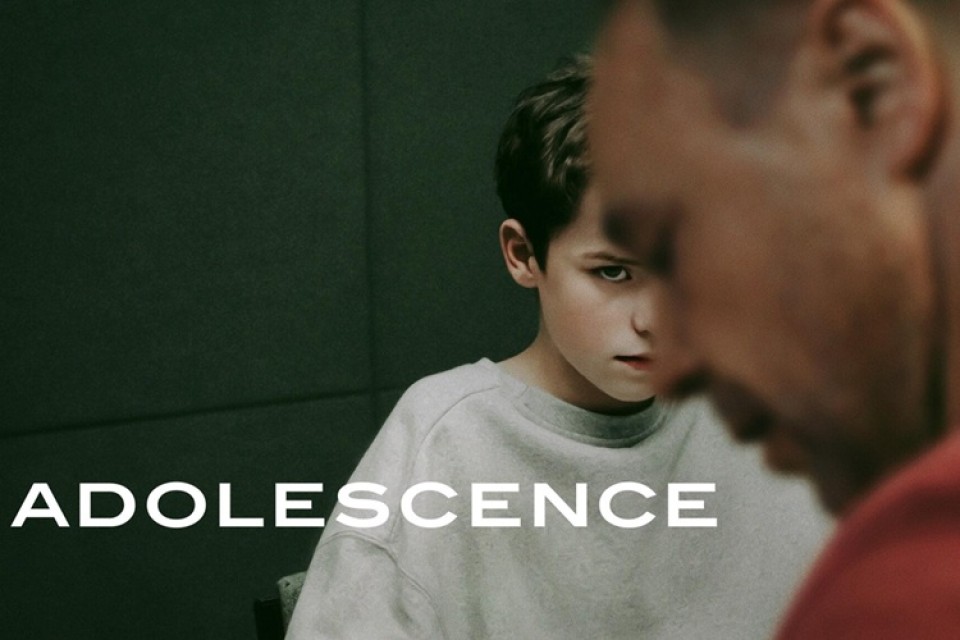
The Netflix series Adolescence (2025) has sparked global conversations about the complexities of growing up in hyperconnected digital societies. As debates intensify around smartphone bans in schools, prohibiting social media use for children, and the rise of grassroots movements such as the Dutch movement ‘smartphone vrij opgroeien’ (‘smartphone-free upbringing’), pressing questions come to the fore. How can we best equip young people with the skills, critical awareness, and resilience needed to navigate digital environments and to grow into informed, engaged citizens in an increasingly networked world?
In response to these developments, we organised a roundtable with experts from across disciplines, including education, transnational legal studies,online safety and cybercrime, and media studies. Here are some key takeaways from that conversation.
The series *Adolescence* vividly portrays how young people are exposed to extreme content, from misogynistic ideologies to radicalization, often without the knowledge of their parents or educators. Participants in the roundtable agreed that this depiction is sometimes accurate, and they shared their struggles in addressing these issues in a non-judgmental way, especially when adults are often unaware of their children’s online activities. As Quin Genee from the Security Directorate of the Municipality of Groningen asked, “What if we could have started these conversations earlier?”. The discussion highlighted the need for proactive engagement with young people about their digital lives, rather than waiting for problems to arise.
A recurring theme was the importance of parents and educators actively engaging with young people’s online experiences. By asking children, “How was your day online?” instead of the usual “How was your day?” parents can encourage open dialogue about young people’s digital lives. This simple shift in questioning can perhaps help bridge the gap between the visible and invisible aspects of a child’s life.
The value of digital literacy programs in schools was also emphasized. For example, Hylke Faber, involved in a teacher training programme for primary school teachers, mentioned that his students role-play scenarios to understand how online content can influence behavior and develop resilience against harmful narratives. However, these efforts are often fragmented and lack sufficient resources, underscoring the need for more comprehensive support.
Legal expert Eline Leijten discussed the responsibilities of digital platforms under regulations like the EU’s Digital Services Act (DSA). The DSA requires very large online platforms (VLOP’s) to assess and mitigate risks to children, but enforcement remains a significant challenge as measures are, in principle, at the discretion of the platforms. The discussion also touched on the tension between children’s right to privacy and the need for protection. While monitoring can help identify risks, overly intrusive measures may infringe on young people’s rights. Finding a balance between safety and privacy is a critical challenge for policymakers and platform, but also for parents.
The conversation acknowledged that digital spaces are not inherently harmful. They also offer opportunities for self-expression, activism, and connection. For instance, in dr. Annamária Neag’s research, young climate activists use social media to organize and amplify their messages, blending online and offline efforts. Participants and speakers both stressed the need for a balanced approach that empowers young people and supports them in dealing with the possible risks posed by digital media. In addition, young people’s use of digital media should not be viewed in isolation of the cultural and social norms in which these interactions take place. Several speakers argued that focusing solely on social media overlooks deeper societal issues, such as misogyny, gender norms, and socioeconomic inequalities. Addressing these root causes through education, community support, and policy, was seen as essential to creating safer digital and physical spaces for youth. Especially conversations and discussion between adults and young people, in which children’s experiences are taken seriously, are important to address the issues at hand. This is something that requires further conversations and exploration, in helping parents, teachers, and the other adults in children’s lives to develop the tools to engage in open, curious and supportive conversation that help them guide children in their exploration of digital media.
The discussion concluded with a call for a “whole society” approach, involving parents, schools, policymakers, platforms, and civil society. The roundtable highlighted the urgency of addressing the challenges young people face in digital spaces, while also recognizing the potential for positive engagement. The key takeaway was the need for proactive, collaborative efforts to foster digital resilience, promote open dialogue, and create safer environments, both online and offline, for adolescents to thrive.
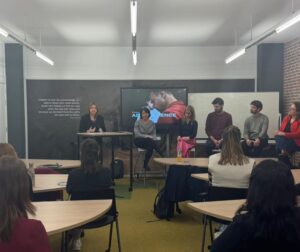
The speakers of the roundtable were:
- Hylke Faber is part of the Teacher Training Programme for Primary Education at the Hanze University of Applied Sciences, in Groningen. He is involved in the minor Digital Literacy.
- Eline Leijten is a lecturer and researcher at the Faculty of Law of the VU Amsterdam.In her research, Eline focuses on the operationalisation of the transparency principle in the regulation of digital technologies, in particular the General Data Protection Regulation (GDPR), Digital Services Act (DSA) and Artificial Intelligence Act (AI Act).
- Quin Genee and David Leenstra from the Gemeente Groningen’s Security Directorate. They both work on youth resilience and online safety and crime.
- Dr. Annamária Neag is an Assistant Professor at the Centre for Media and Journalism Studies at the University of Groningen. Her research focuses on media literacy, digital inclusion and the (digital) activism of marginalised communities.